



Style guide
Contents
This guide explains how the PostHog brand should appear across:
- the website
- the product UI
- documentation
- blog content
- marketing
- external assets
Brand != marketing
It's the sum of how people experience PostHog – from the homepage to documentation to support conversations.
Our goal is simple: earn the trust of developers.
Developers tend to distrust marketing. They prefer tools that feel human, honest, and thoughtfully built, not overly polished corporate brands.
Because of this, PostHog deliberately avoids sounding or looking like typical B2B SaaS companies.
Brand is everyone's job
Every interaction contributes to the brand.
Two ideas shape how we build and present PostHog.
Yes and…
We expand ideas instead of shutting them down. This mindset encourages creativity and experimentation.
It'd be better if we built it ourselves
The best products are built by people who care deeply about what they create.
In practice: everyone who ships something contributes to the brand.
Brand personality
| PostHog should feel | Avoid being |
|---|---|
| Opinionated | Corporate |
| Human | Generic |
| Slightly weird | Overly polished |
| Thoughtful | Forced or cheesy |
| Direct | |
| Honest |
Developers connect with products that feel authentic, not brands trying to sound impressive.
Voice and tone
Write the way you would explain something to a smart friend.
- Be clear and simple
- Avoid jargon
- Avoid buzzwords
- Avoid fluff
- Be conversational
- Be honest
Humor is welcome, but it should never feel forced.
The dating profile test
Most SaaS companies write like they're submitting a résumé. Safe. Formal. Generic.
PostHog writes more like a dating profile: authentic, memorable, slightly weird, showing personality.
Users don't connect with product specs. They connect with people and ideas.
Design philosophy
PostHog design focuses on thoughtfulness and clarity, not looking luxurious.
Taste > polish
Design should feel crafted, not corporate. A thoughtful design builds trust.
Care about the details
Small details communicate quality. Examples: typography, spacing, illustration, layout, visual balance.
Users may not consciously notice them, but they still feel them.
Be intentional
Every design element should serve a purpose. Design should help:
- explain something
- guide attention
- improve readability
- add personality
Avoid decoration without meaning.
Visual identity
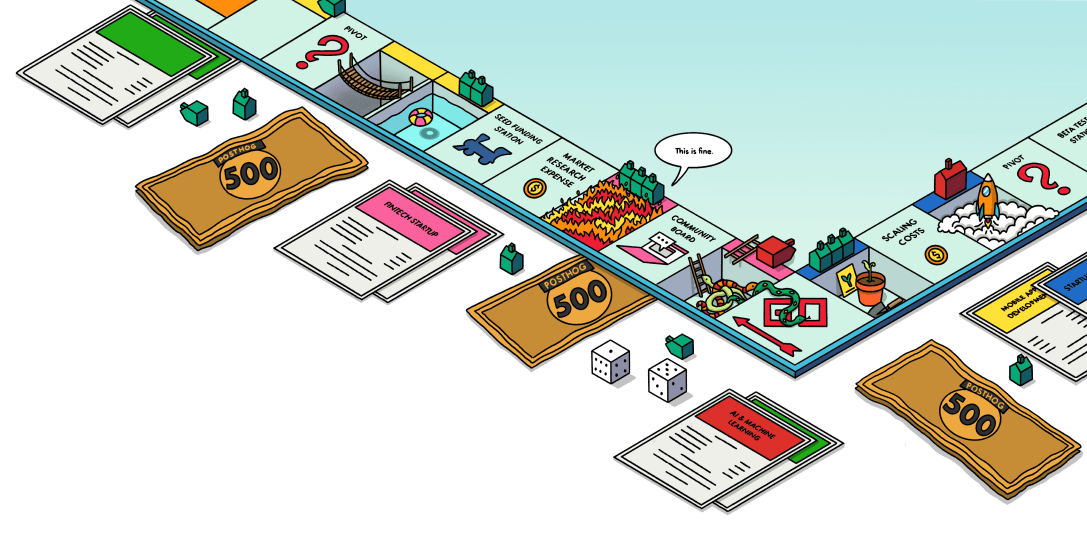
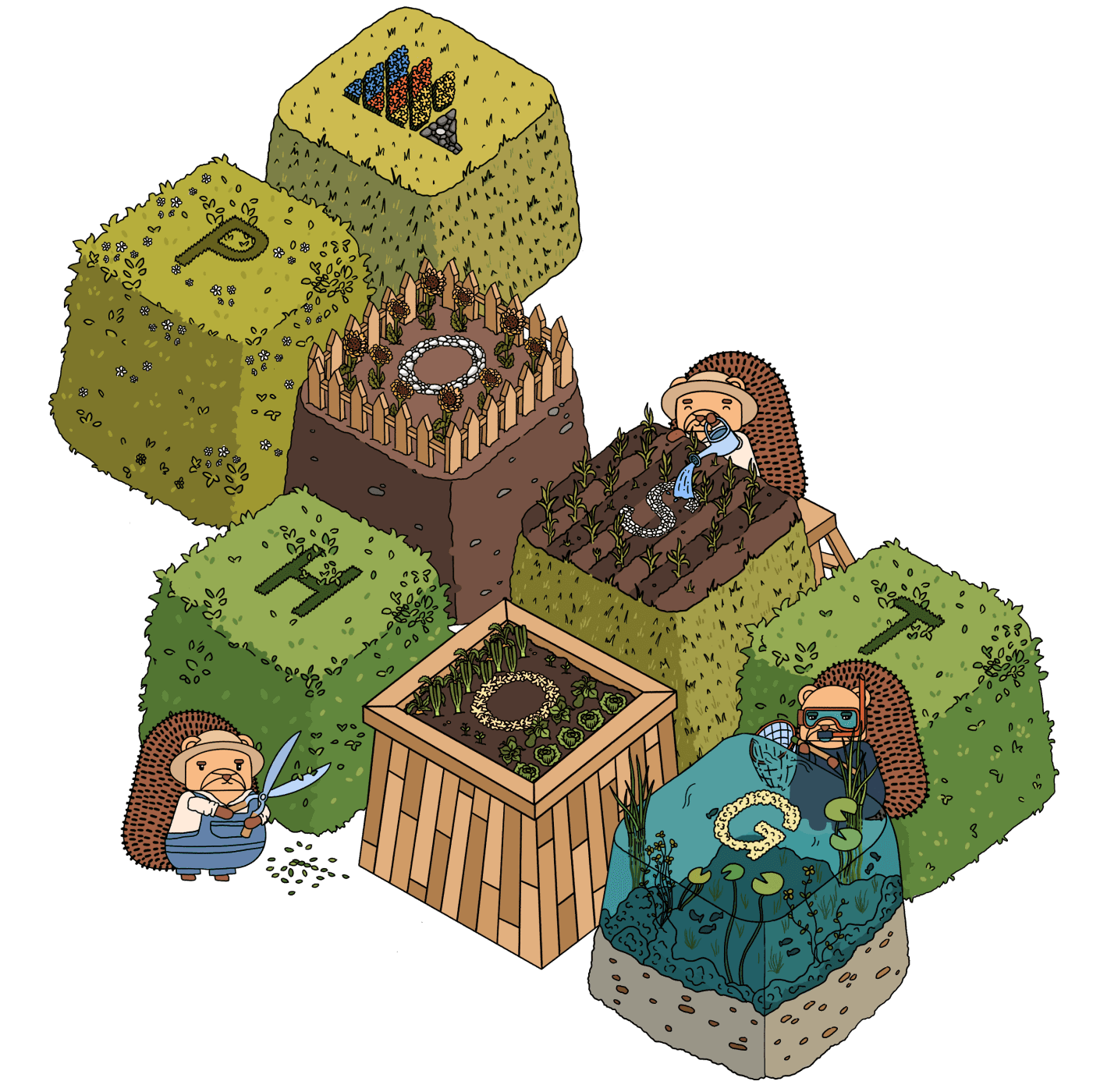
The PostHog visual style is intentionally distinctive. It should feel: handcrafted, playful, slightly weird, thoughtful, recognizable.
If something could exist on any other SaaS website, it probably isn't PostHog enough.
Core visual elements
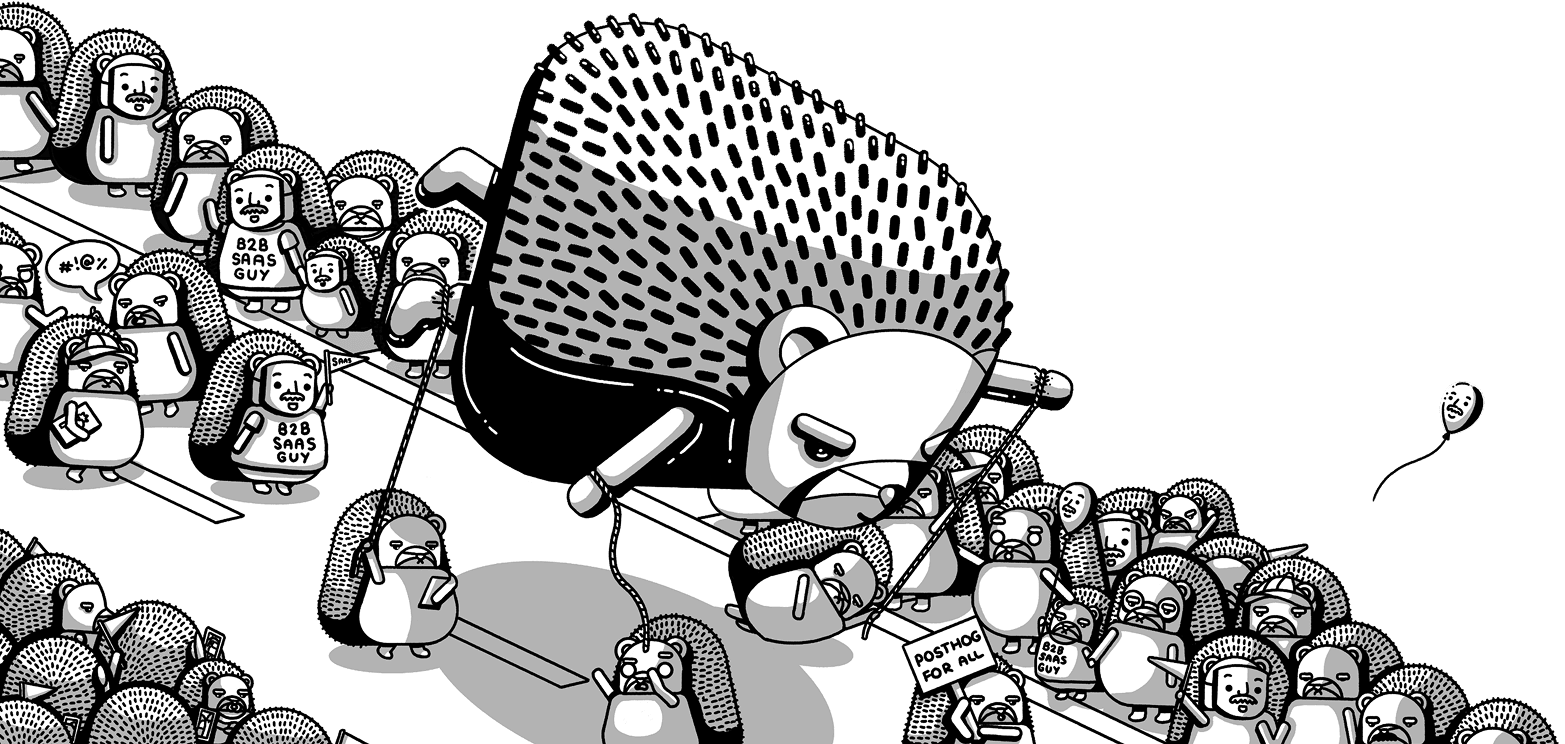
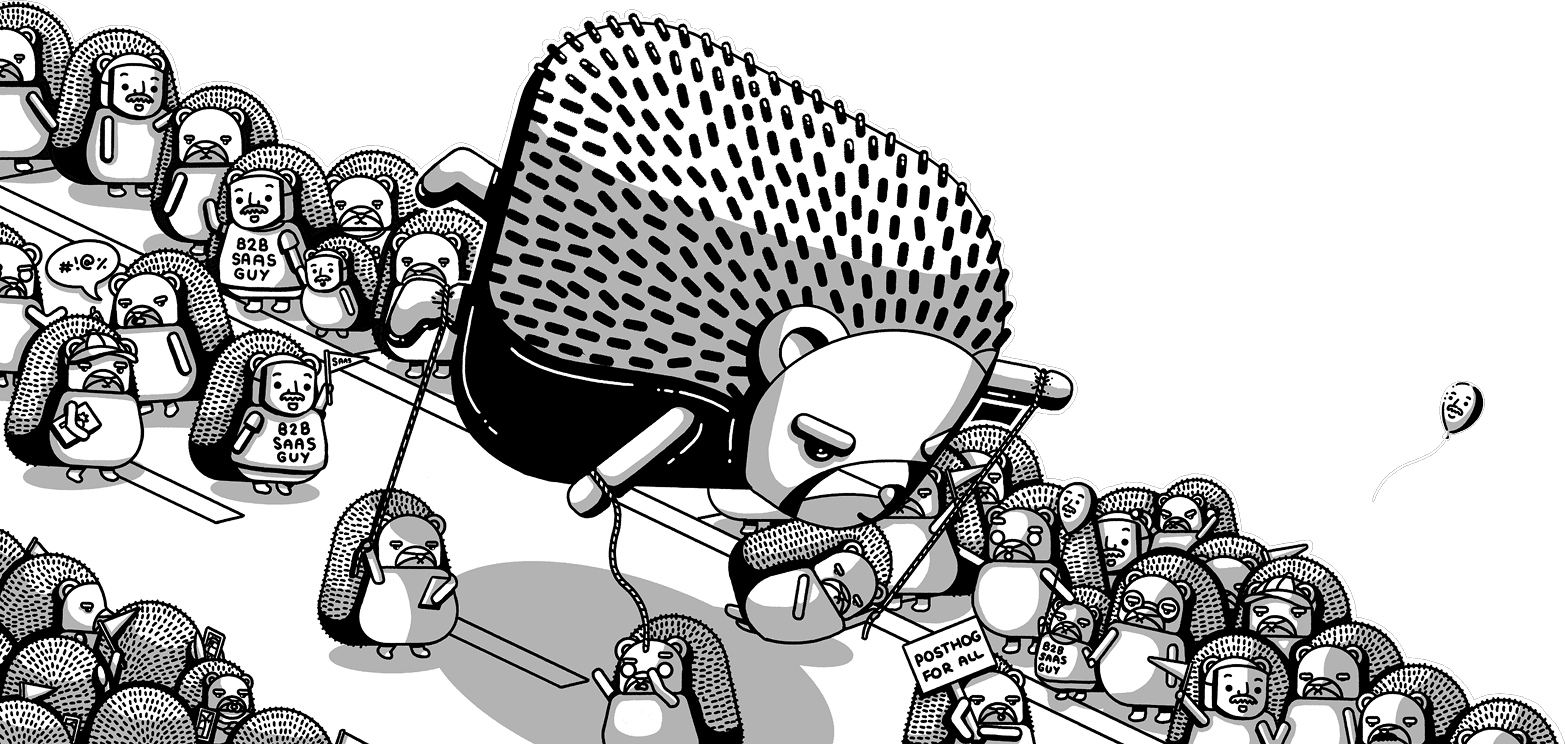
Hedgehogs
Hedgehogs are a core brand element (though not every asset needs one).
Guidelines:
- Bold monoline
- No highlights
- Two tone shadow (one at 100% opacity to be used sparingly, one at 24% for creating depth, shadows always to be
#000000black) - Playful personality
The hedgehog is a creative vehicle for translating our personality into something expressive and alive.
Illustration
Illustrations help explain ideas and add personality. They should:
- Support the content
- Tell a story
- Feel hand-crafted
- Remain simple
Avoid:
- Stock illustrations
- Trendy SaaS artwork
- Overly complex drawings
- Boring or obvious designs
Simple is usually better.
Typography
Primary fonts:
- IBM Plex Sans – main typography
- Squeak – expressive marketing headlines
- Loud Noises – used for quotes in hedgehog artwork
Typography should prioritize readability, hierarchy, and clarity.
Color
Color should guide attention rather than dominate the page.
General approach:
- Solid backgrounds
- Limited palette
- Illustrations more colorful than the layout
Avoid:
- Gradients everywhere
- Too many colors
- Visual noise
PostHog vs. typical SaaS
| Average SaaS | PostHog | |
|---|---|---|
| Headline | Buzzwords | Clear and direct |
| Visual style | Gradients and abstract shapes | Custom illustrations |
| Tone | Formal | Conversational |
| Design goal | Look professional | Look intentional |
| Brand | Generic | Distinctive |
Common mistakes
Generic SaaS design – Gradients, blobs, and stock illustrations make designs forgettable.
Decoration over clarity – Design should support the content, not distract from it.
Forced humor – Humor should feel natural.
Overly polished designs – Perfect designs can feel corporate.
Copying competitors – PostHog aims to be distinctive, not trendy.
Design checklist
Before publishing something, ask:
- Does this feel like PostHog?
- If you remove the logo, will it still feel on brand?
- Is the message clear?
- Is the design intentional?
- Does it feel human?
- Would someone enjoy looking at this?
If the answer to most of these is yes, you're probably on the right track.
The goal isn't to look expensive. The goal is to make people think: "Someone clearly cared about making this."